Why I Still Ride an Old Bike: A Love Letter to the Untamed
- musings
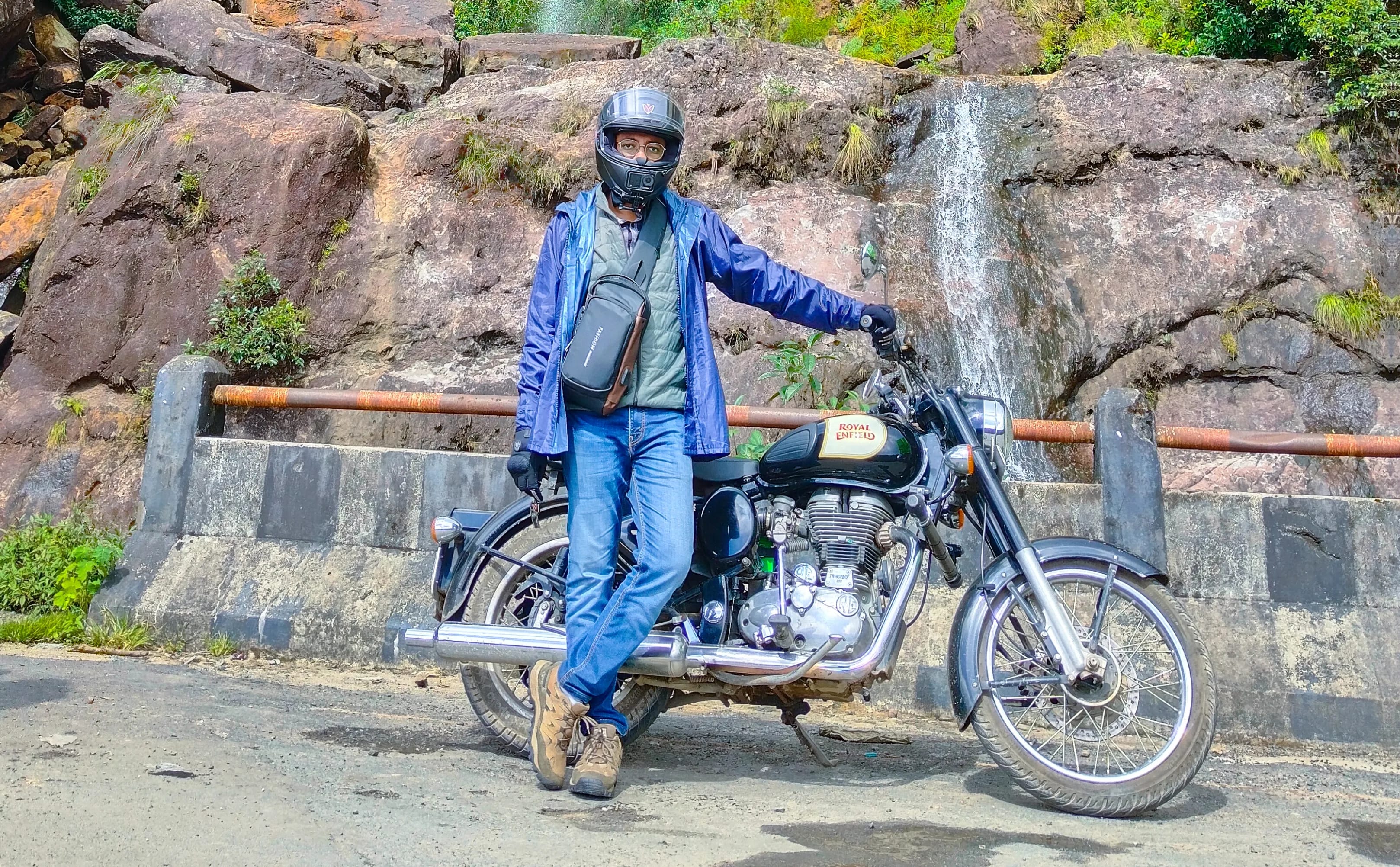
There’s a small ritual I do every morning before I ride. I check the fuel tap. I pull the choke. I press down on the kickstart lever, slowly, just enough to find the compression. Then I swing my weight through it. Sometimes she starts on the first kick. Sometimes she makes me earn it. Either way, by the time the engine settles into that uneven, throaty idle, I’m already smiling.
I know what you’re thinking. There’s a button for that now. There’s a button on my bike as well. But I don’t use it. I want a motorcycle that gives me a little bit of a challenge.
No, I am not crazy. Hear me out.
Why we love things that don’t obey
It probably starts with horses. Ancient DNA suggests the horse we ride today was domesticated on the Western Eurasian steppe around 4,200 years ago, and it reshaped how humans moved, fought, and traded across continents. (Well, technically dogs were the first animal to be domesticated. But I am going to stick with horse since no one rides a dog. If you do, please don’t.)
We didn’t just get a faster way to travel. We got a partner whose moods we had to read, whose temper we had to learn, whose quirks we had to memorise. Studies on equine-assisted therapy keep finding the same thing: people who spend time around horses report lower stress and a stronger sense of self. Not because the horse is easy. Because it isn’t.
There’s something deep in us, I suspect, that wants the thing we ride to push back a little. To have a will of its own. To remind us that we are not the only ones in this relationship.
The poetry of imperfect things
Modern motorcycles are incredible machines. ABS, traction control, ride-by-wire, riding modes, TFT displays that tell you everything from your lean angle to whether your tyres are happy. They are safer, faster, smoother, and far more reliable than anything my old Classic will ever be. But that unreliable bike is what I ride, and here’s why.
A kickstart is not just a way to start an engine. It’s a handshake. There’s a rhythm to it, an honesty. The bike asks you to commit, and you do, and in return she comes alive. On a bad morning, when she’s stubborn, you learn patience. On a good morning, when she fires on the first kick, you feel like you’ve done something right.
A manual speedometer needle isn’t precise, and that’s the point. It moves like a creature breathing. You glance at it and you don’t read a number, you read a mood.
Engine vibrations, the ones modern bikes engineer out with rubber mounts and counterbalancers, are a language. After a few thousand kilometres, you know which vibration means she’s happy, which one means the chain needs adjusting, and which one means you should probably pull over at the next chai shop and listen.
Spoke wheels flex. They need truing, they need to be taken off to fix a puncture, and they’re a pain to clean. But on a bad road, like the one on my Mawsynram trip, they forgive you in a way alloys don’t.
None of this is efficient. A modern bike is much more efficient in everything that I mentioned. But that’s not the reason I ride.
Moving versus arriving
There’s an idea in Matthew Crawford’s Shop Class as Soulcraft about how the more we automate, the less of ourselves we get to bring to a task. The more buttons we push, the fewer skills we own. We are, slowly, being relieved of the burden of being present. And we are calling it progress.
Maybe it is. Maybe I am just romanticizing an old way of life. I’m not here to argue.
I’ll just say this: when I kick her over in the morning, when I feel that first vibration through the footpegs, I am not just moving from point A to B.
I am, for those few hours, alive in a way I struggle to be anywhere else. And that, I think, is why I’ll keep riding her until one of us gives out.
P.S. Govt. wants to ban all bikes older than 15 years. If you’re riding one, you’re a criminal. In case you’re wondering if I’m going to jail, I’ll keep you posted.